29th January 1817 – 18th October 1903
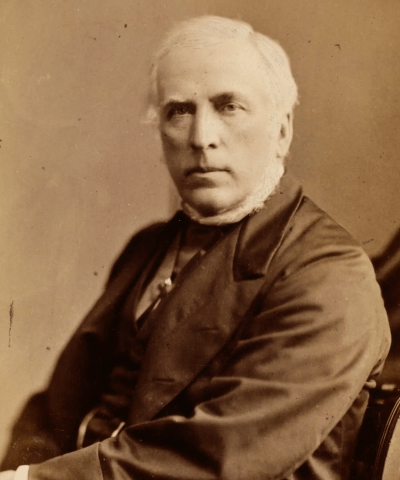
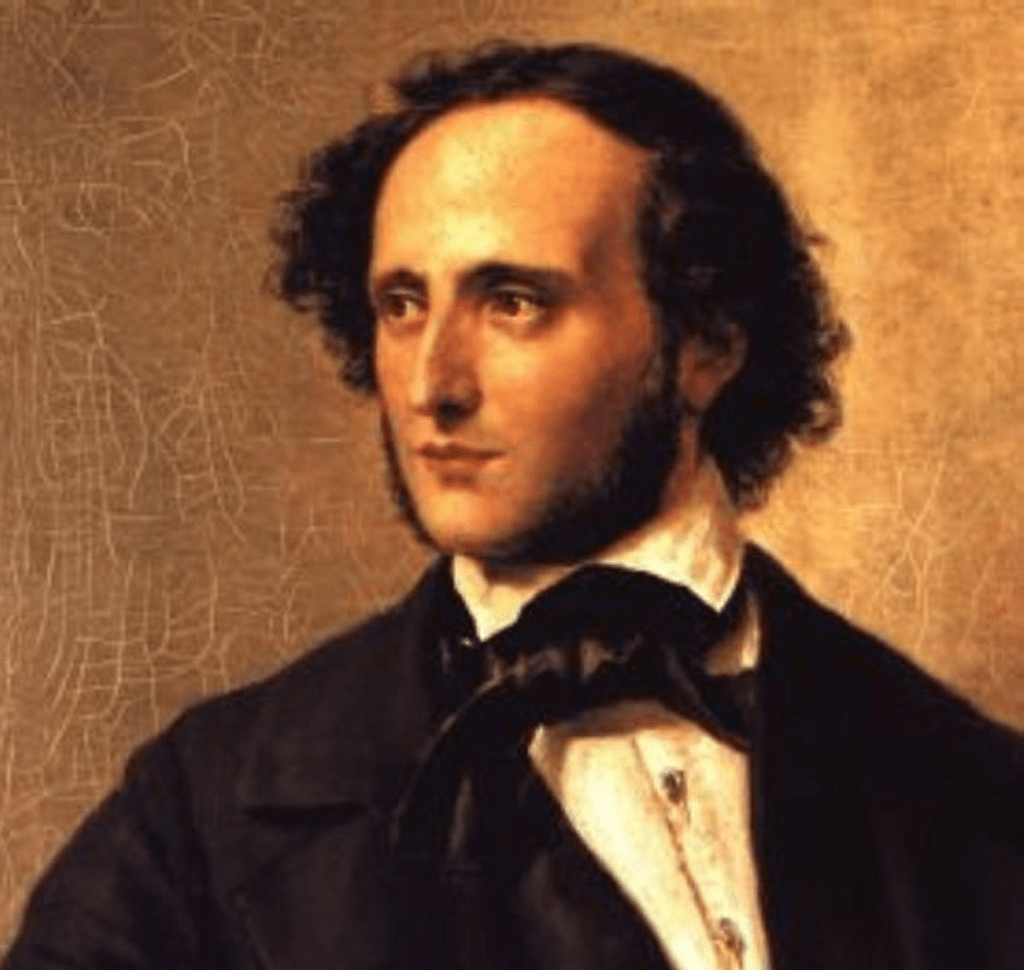
John Callcott Horsley was an artist. He was born to William Horsley, a prominent musician and composer. John’s father was a friend of the composer Felix Mendelssohn and Mendelssohn would spend time with the family when he was visiting England. Letters written by John’s sisters Fanny and Sophie in 1833 make numerous references to Mendelssohn and the flirting that occurred between them. The Horsley family were the first to hear Mendelssohn’s music for A Midsummer Night’s Dream, which Mendelssohn played for them on their piano in their home.
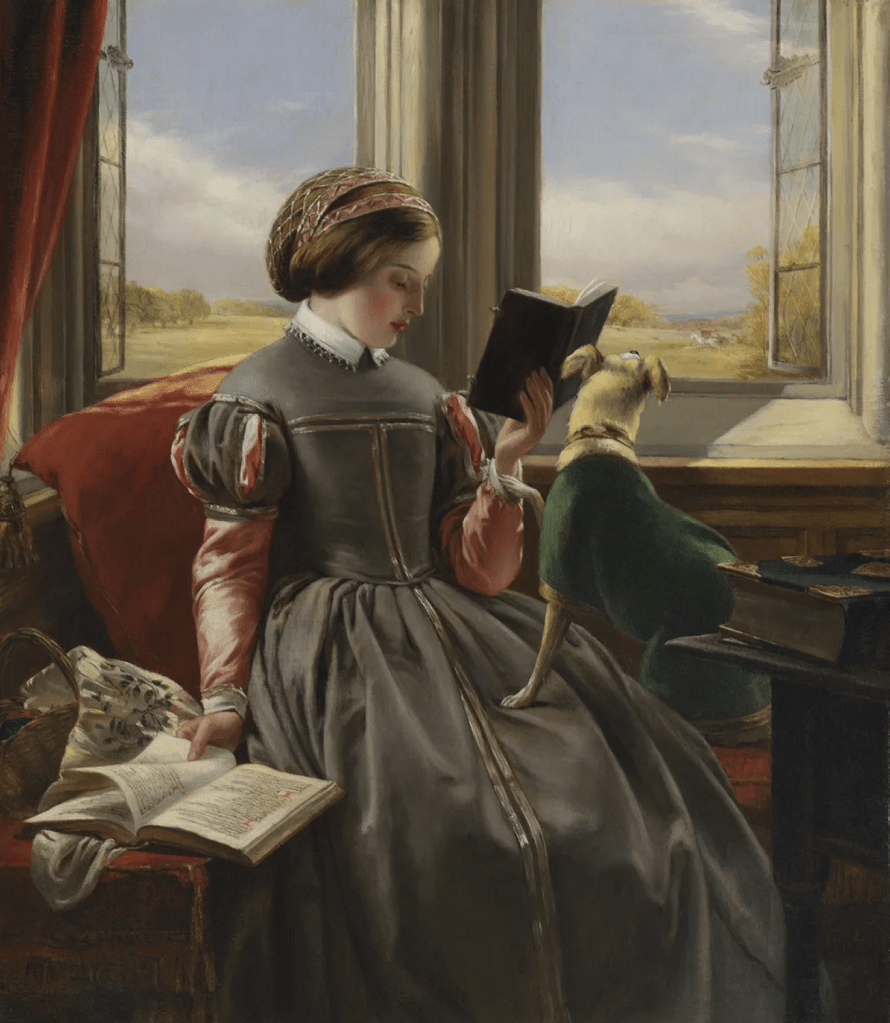
At the age of 13 John went to an art school and upon graduation he attended the Royal Academy. In 1836, aged 19, he had his first painting, The Pride of the Village, exhibited at the Royal Academy.
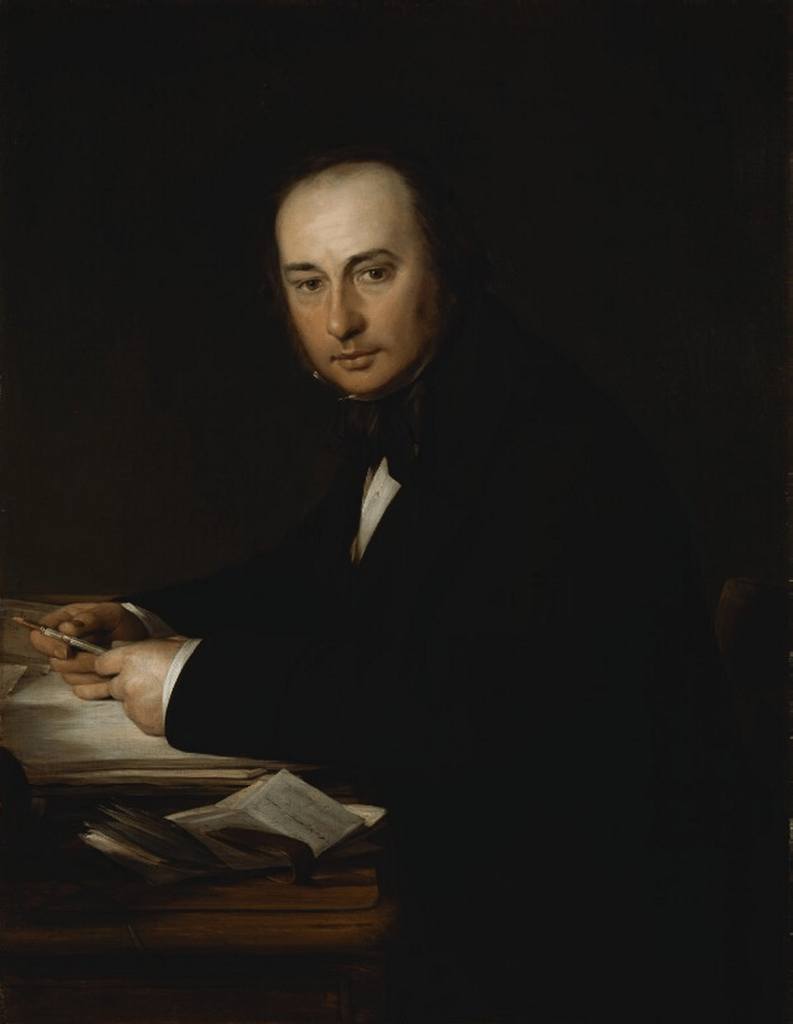
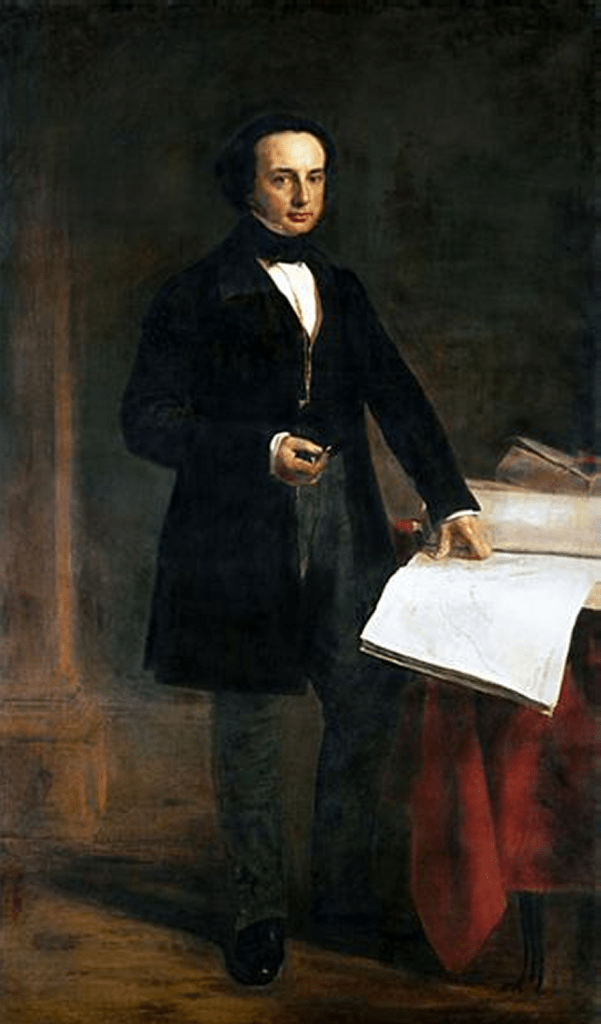
Also in 1836 John’s elder sister Mary married the civil engineer Isambard Kingdom Brunel. Brunel got on well with his in-laws and was a frequent visitor to their family home. John painted at least two portraits of his brother-in-law.
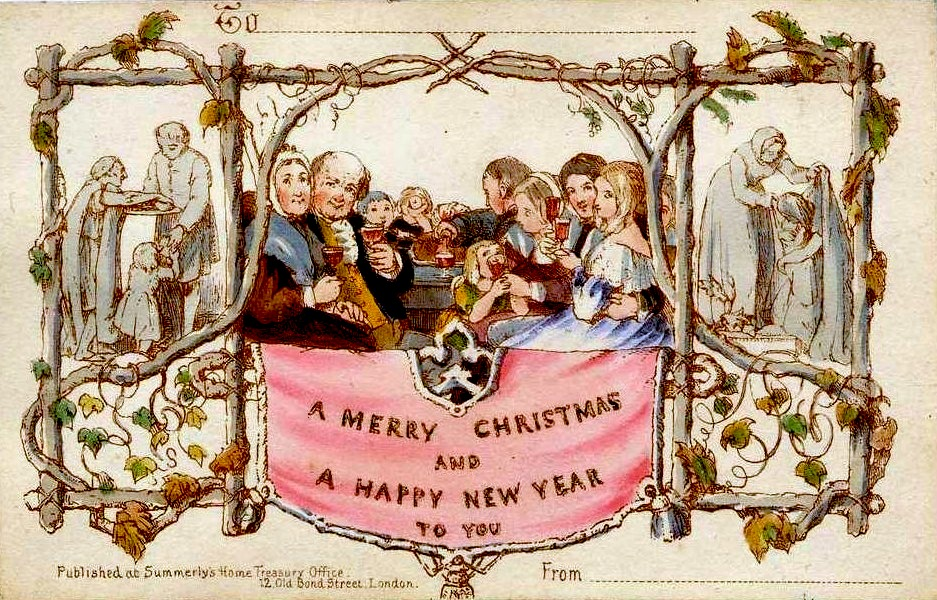
In 1843 the civil servant and inventor Sir Henry Cole came up with the idea of a Christmas card which could express Christmas greetings to friends in an easier fashion than by the writing of a letter. He commissioned John Callcott Horsley to design it and he is thus credited with illustrating the first Christmas card. There was some concern at the time over the depiction of a child drinking alcohol.
John married Elvira Walter in 1846 and they had three sons between 1848 and 1850. Elvira died of consumption in 1852 and all three sons succumbed to Scarlet Fever over the next five years. He remarried to Rosamund Haden in 1854 and went on to have seven children, five of whom survived to adulthood. By the time our letter was written in 1868 John had lost a wife and five children. This explains his use of mourning paper, as evidenced by the black border.
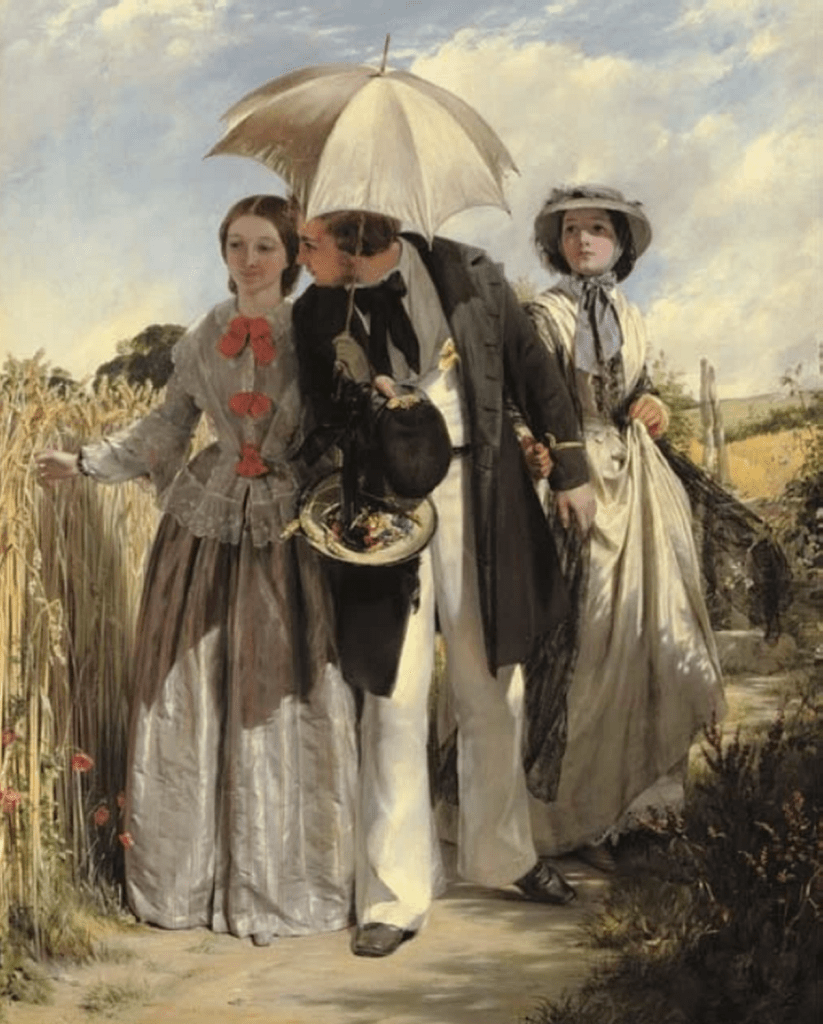
In 1861 John moved to “Willesley” in Cranbrook, Kent, and it is here that he wrote the letter. He joined the Cranbrook Colony, an artist community inspired by 17th Century Dutch and Flemish painters. They focused on painting pictures of everyday life. In 2006, John’s painting Showing a Preference sold at Christie’s for £299,200.
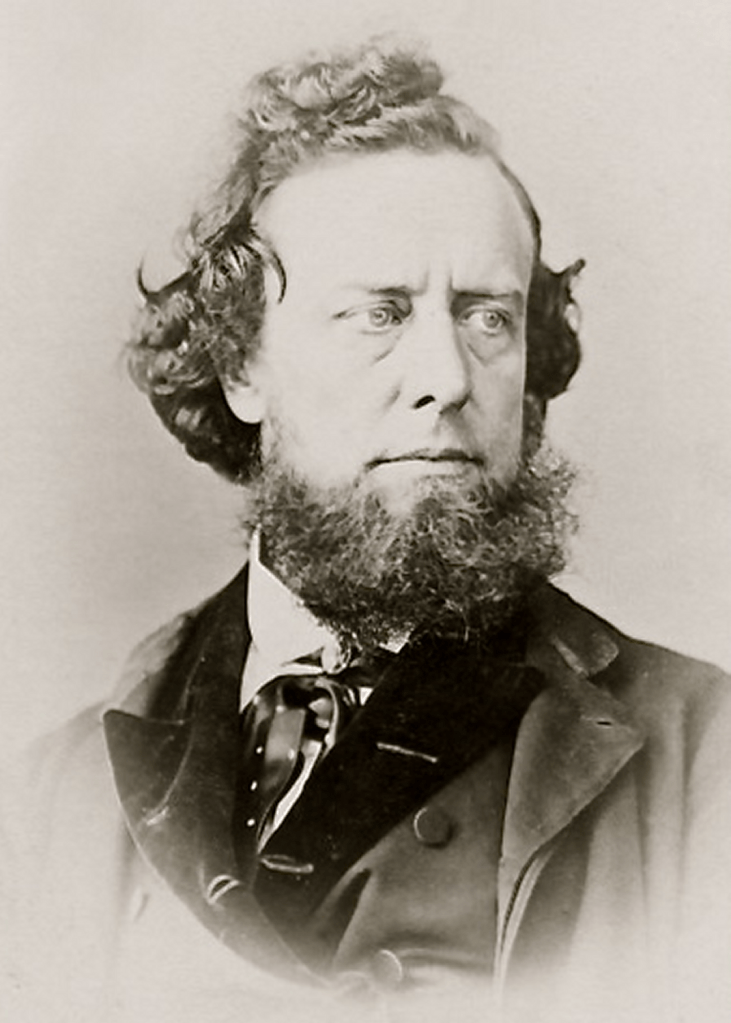
The recipient of our letter was William Hepworth Dixon (1821 – 1879), a well-travelled historian. In 1850 he was appointed deputy commissioner for the following year’s Great Exhibition. In 1873 he campaigned to have the Tower of London opened to the public. Prime Minister Disraeli approved and Dixon himself would often guide visitors around the building.
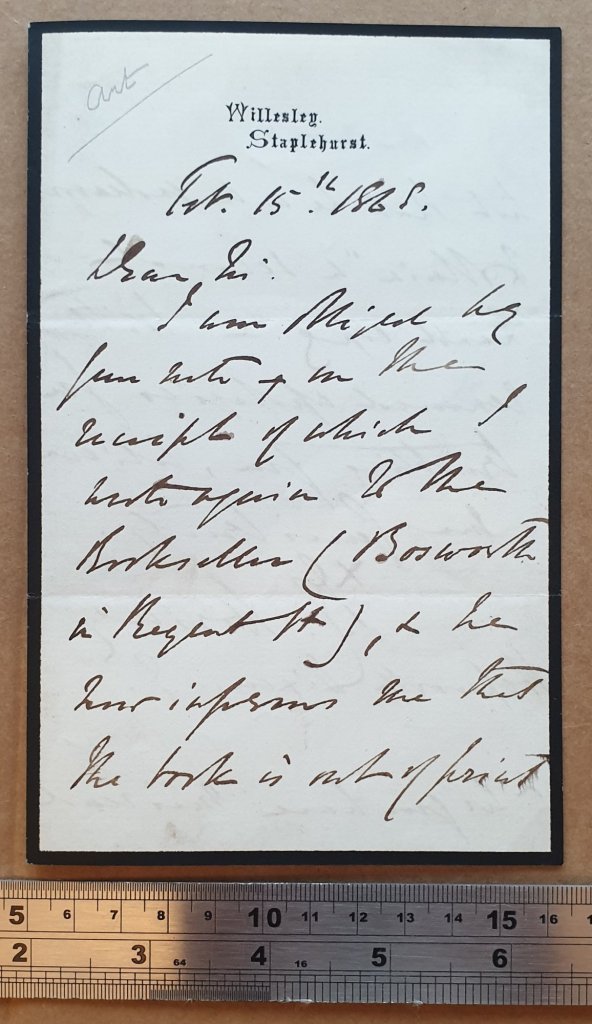
Feb. 15th 1868
Dear Sir,
I was .............
............  & in the
receipt of which I
................... the
Bookseller (Bosworth
in Regent St), & he
...... informs me that
the book is not finished
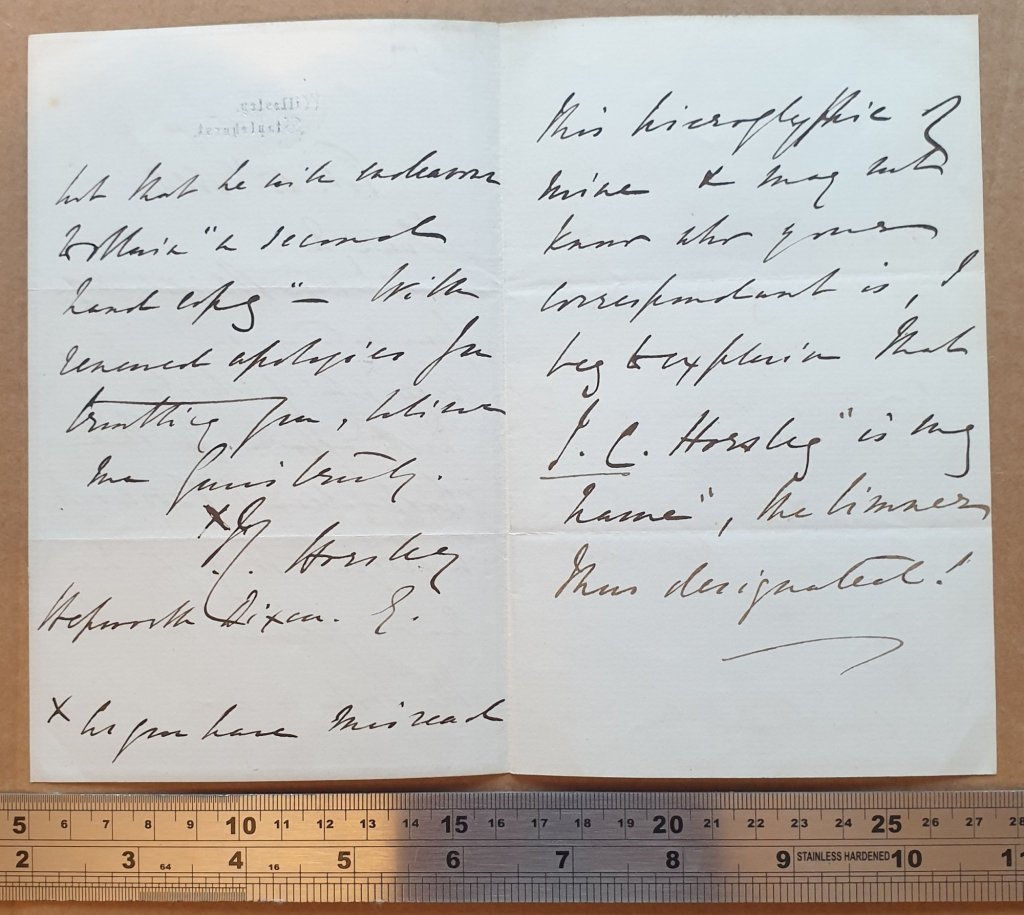
but that he will .....
............ "a second
hand copy"  - with
renewed apologies for
troubling you, believe
    me yours truly
        x Horsley
Hepworth Dixon

x As you have misread
this hieroglyphic of
mine & may not
know who your
correspondant is, I
beg to explain that
J.C. Horsley "is my
name", the limner
thus designated!
8th December 2025
 Brad's Letters
Leave a comment