17th August 1786 – 16th March 1861
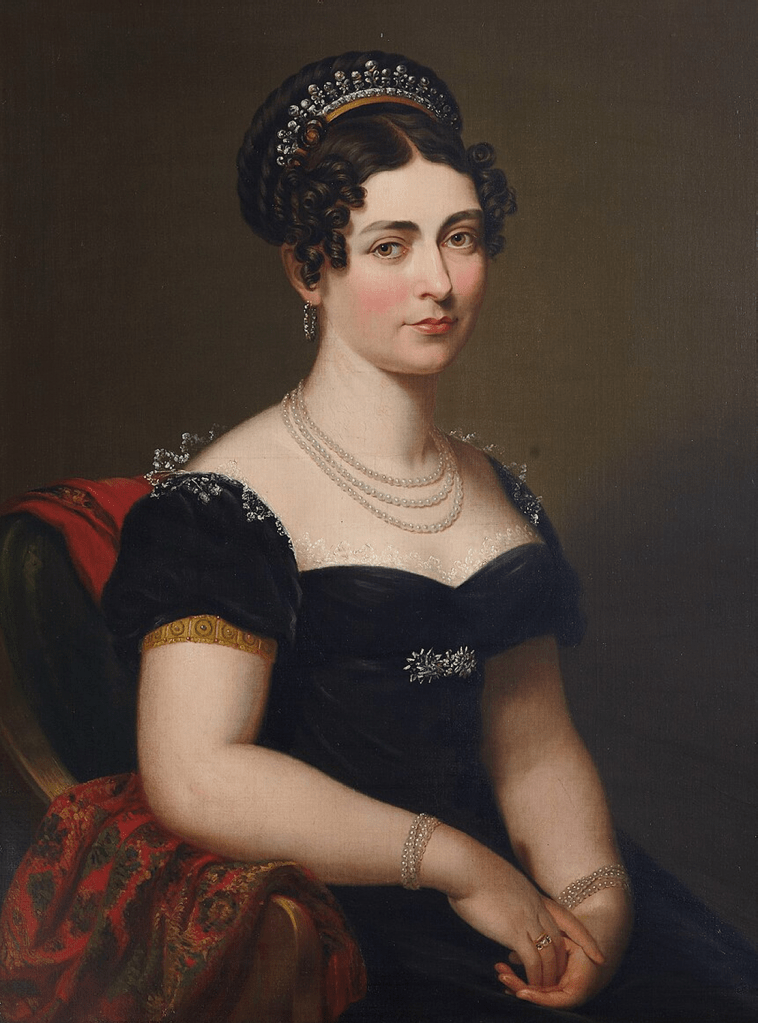
Victoria was born Marie Louise Victoire in the Holy Roman Empire of the German Nation. A daughter of the Duke and Countess of Saxe-Coburg-Saalfeld, Victoria had three brothers and three sisters. One of her brothers, Ernest, would have a son called Albert, better known to us today as Queen Victoria’s consort Prince Albert. Another brother, Leopold, would one day become King of the Belgians. In 1816, Leopold married Princess Charlotte of Wales. Charlotte was the only legitimate child of the future King George IV and so was destined to one day become Queen.
In 1803 Victoria married the Prince of Leiningen. They had two children, Prince Karl and Princess Feodora. Victoria’s husband died in 1814 with Karl, the heir, only 9 years of age. As such, Victoria served as Regent of the Principality of Leiningen until Prince Karl came of age.
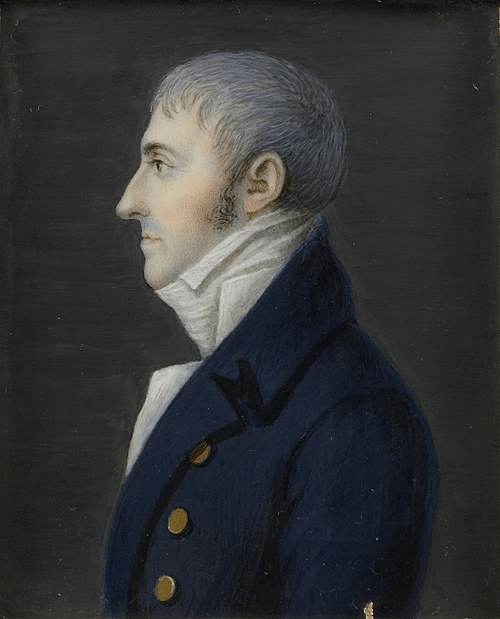
The 6th November 1817 was a day when the path of history changed. Princess Charlotte, the heir to the British throne after her grandfather King George III and her father the future King George IV died in childbirth. Her son was stillborn. Charlotte’s death created a succession crisis. Parliament sought a solution through offering financial incentives to the sons of King George III, brothers of the Prince of Wales and all well into middle age and without any legitimate progeny, to marry and have children, with the wife of the Prince of Wales by now beyond childbearing age.
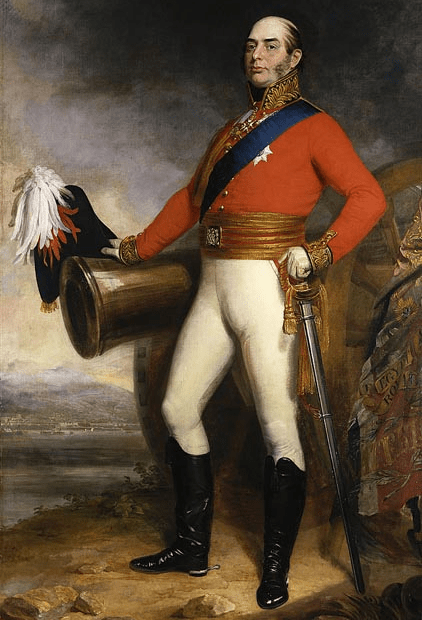
One of the sons, Prince Edward, Duke of Kent and Strathearn, proposed to the widowed Victoria and she accepted. They married in 1818 and promptly moved to Germany as the cost of living was cheaper there.
Victoria soon fell pregnant and, determined that their child should be born on British soil, they made a speedy return to England with the assistance of Sir John Conroy. The Kents arrived at Dover on the 23rd April 1819. A month later, on the 24th May, Victoria gave birth to a daughter, Princess Alexandrina Victoria of Kent. She would one day become Queen Victoria.
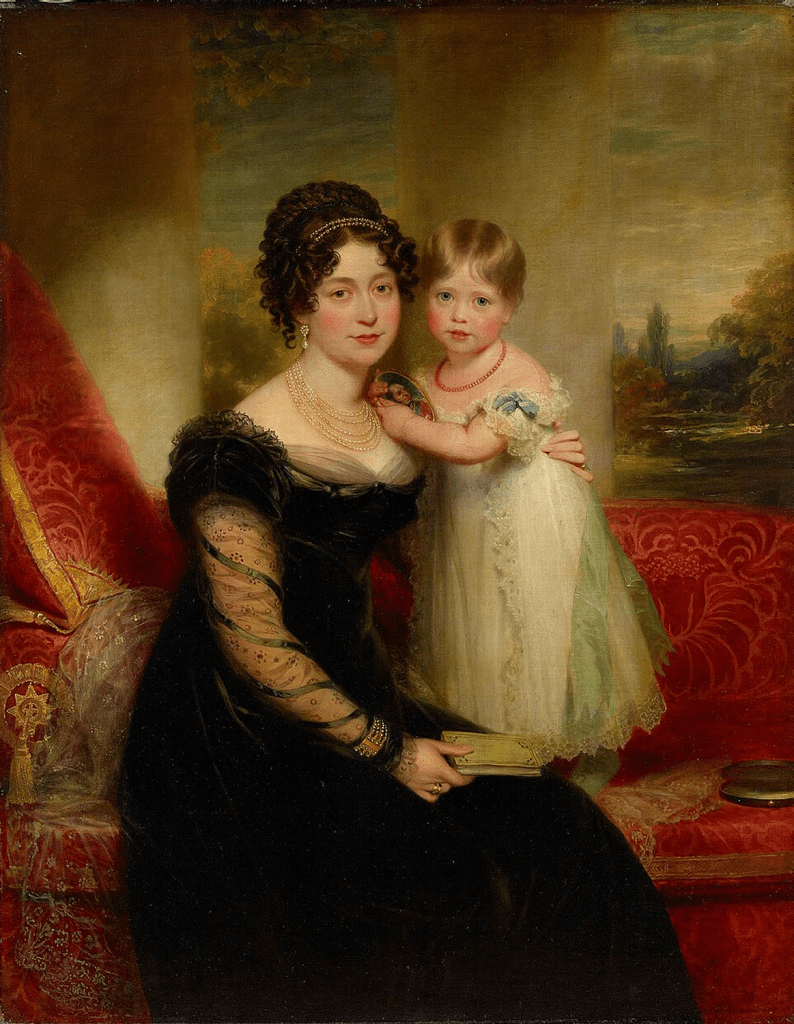
Just 8 months after the birth of his daughter, Prince Edward suddenly died of pneumonia. For the second time Victoria was widowed. Having little command of the English language and with a palace back home in cheaper Coburg, Victoria had little reason to remain in England. However, with the other royal sons failing to produce any legitimate heirs, the baby Princess Victoria was third-in-line to the throne. Victoria decided to stay in London. She sought financial support from the British government but they were only willing to offer a minimal subsidy.
Victoria stayed in the run-down Kensington Palace along with other less-than-well-off members of the Royal Family. Her main source of financial support came from her brother, Leopold. As husband of Princess Charlotte it was expected that one day he would be consort to the Queen and so was awarded £50,000 per annum for life, a considerable income worth around £4m today. Although Charlotte had died, Leopold was allowed to keep his annuity.
By 1831 King George IV was dead and his brother, King William IV, was on the throne. With William in his late 60s and his wife beyond childbearing age, the now 12-year-old Princess Victoria was heir presumptive to the throne and it was expected that her mother could spend some time as Regent. As such, Parliament greatly increased Victoria’s allowance. Her brother Leopold was now King of the Belgians and had surrendered his £50,000 British income. This extra money that was now available would have been useful to Parliament when it came to improving their generosity towards Victoria.
Around 1836 Victoria composed The Royal Artillery Slow March. It is still performed today.
Always much of an outsider within the Royal Family, Victoria formed a close relationship with Sir John Conroy, the man who managed her swift return to England in 1819. Sir John served as Victoria’s private secretary for 19 years and also performed other roles such as counsellor, confidant, and public relations officer. Between the two of them they created the infamous Kensington System. This was a method of raising the young Princess Victoria in such a way that would make her entirely dependent upon her mother and Sir John. The young girl was only permitted two playmates throughout her childhood, her half-sister Feodora and Conroy’s daughter Victoire. Trips away from the Palace were a rarity and she was never allowed time alone; her mother, her tutor, or her governesses were always present. It was expected that the aging King William IV would die before the Princess came of age and so her mother would therefore become Regent for a period. It was also planned that Sir John would be created the new Queen’s private secretary and given a peerage.
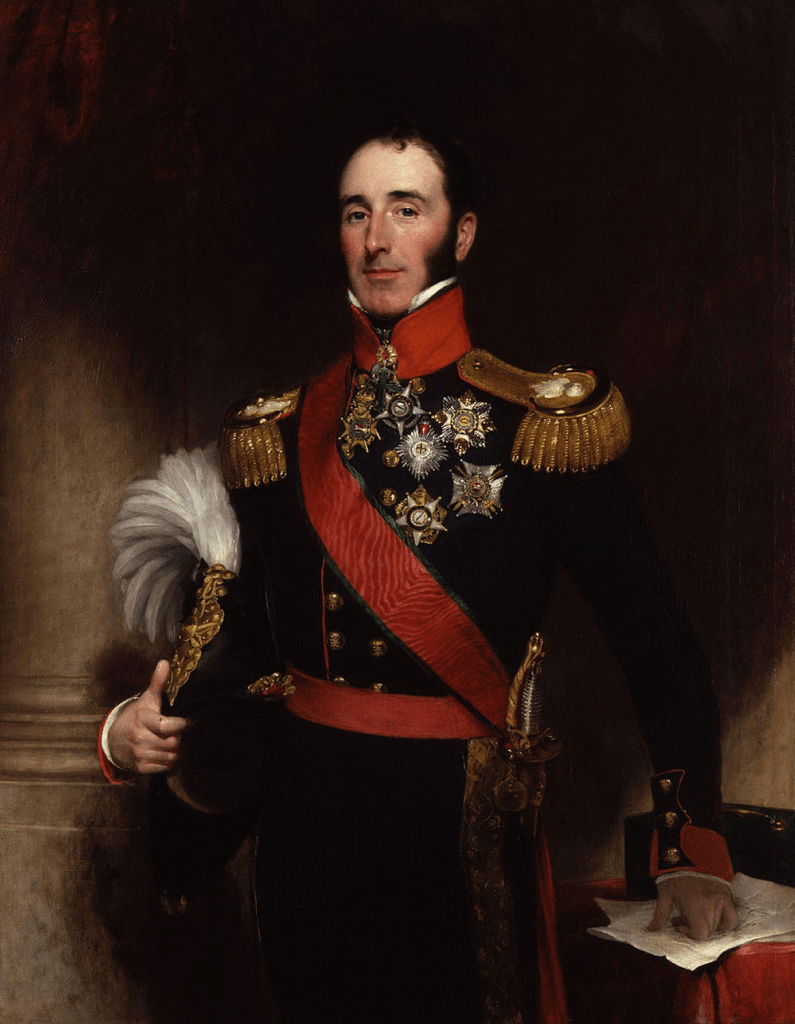
Victoria avoided William’s Royal Court as she felt the presence of the King’s illegitimate children to be highly inappropriate. She also did all she could to prevent contact between the King and his niece. William and his wife, Queen Adelaide, were keen to have a relationship with the young heiress but Victoria proved an eternal hindrance. At his final birthday banquet in August 1836, which Victoria and her daughter attended, the King made a speech in which he expressed a hope that he would live long enough so that his niece would be of age and could ascend the throne without her mother becoming Regent:
I trust to God that my life may be spared for nine months longer … I should then have the satisfaction of leaving the exercise of the Royal authority to the personal authority of that young lady, heiress presumptive to the Crown, and not in the hands of a person now near me, who is surrounded by evil advisers and is herself incompetent to act with propriety in the situation in which she would be placed.
Victoria became distanced from her daughter when she became Queen in 1837 with the new monarch understandably using her new power and status to break free from the stifling Kensington System.
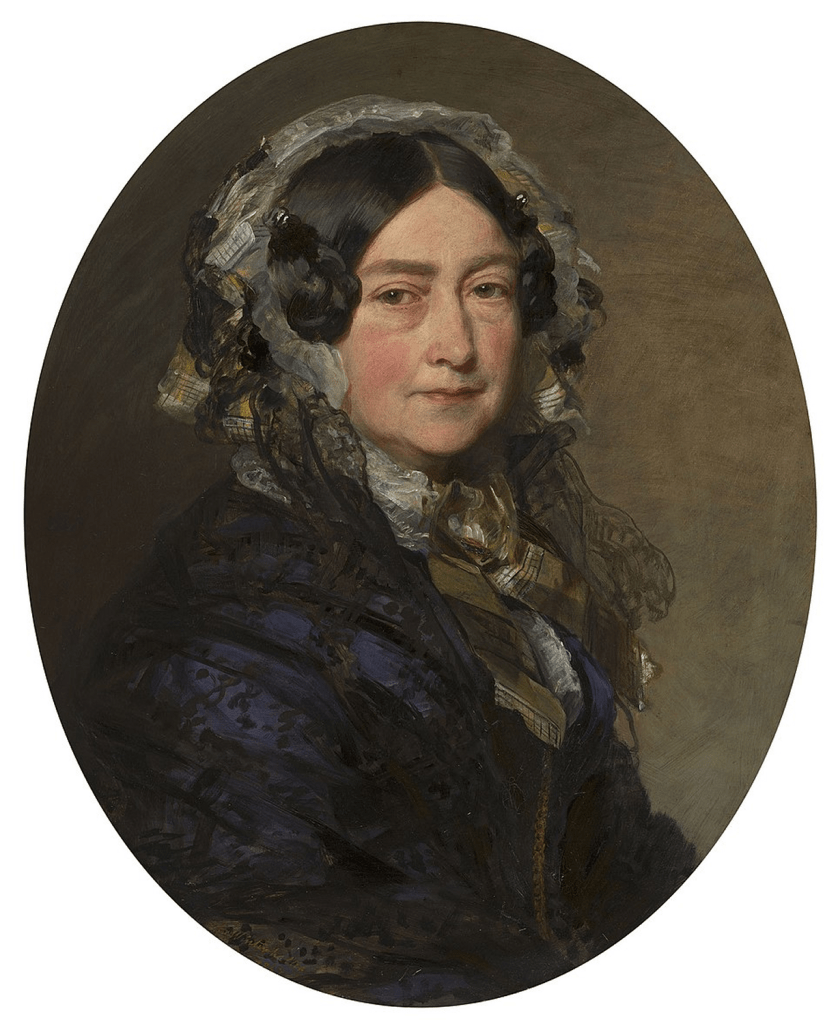
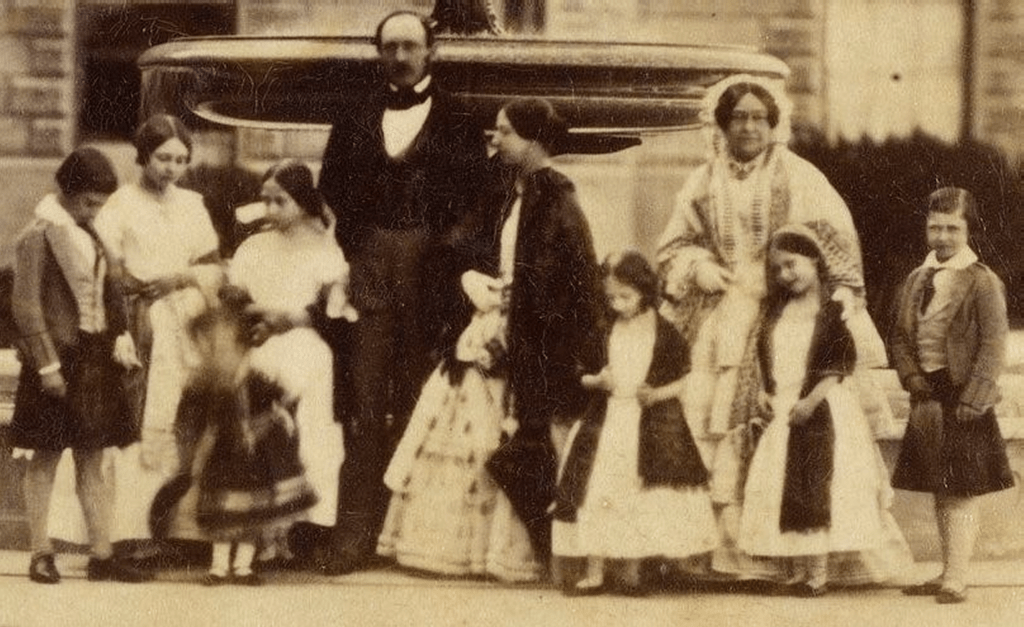
The aging Duchess was suddenly welcomed back into the Queen’s inner circle upon the birth of her first child. Sir John Conroy was by now living abroad and it is likely that the Queen’s husband, Prince Albert, who was the elder Victoria’s nephew, played a part in bringing his wife and aunt towards a reconciliation. The Duchess became a doting grandmother towards her grandchildren and her relationship with her daughter was the closest it had ever been.
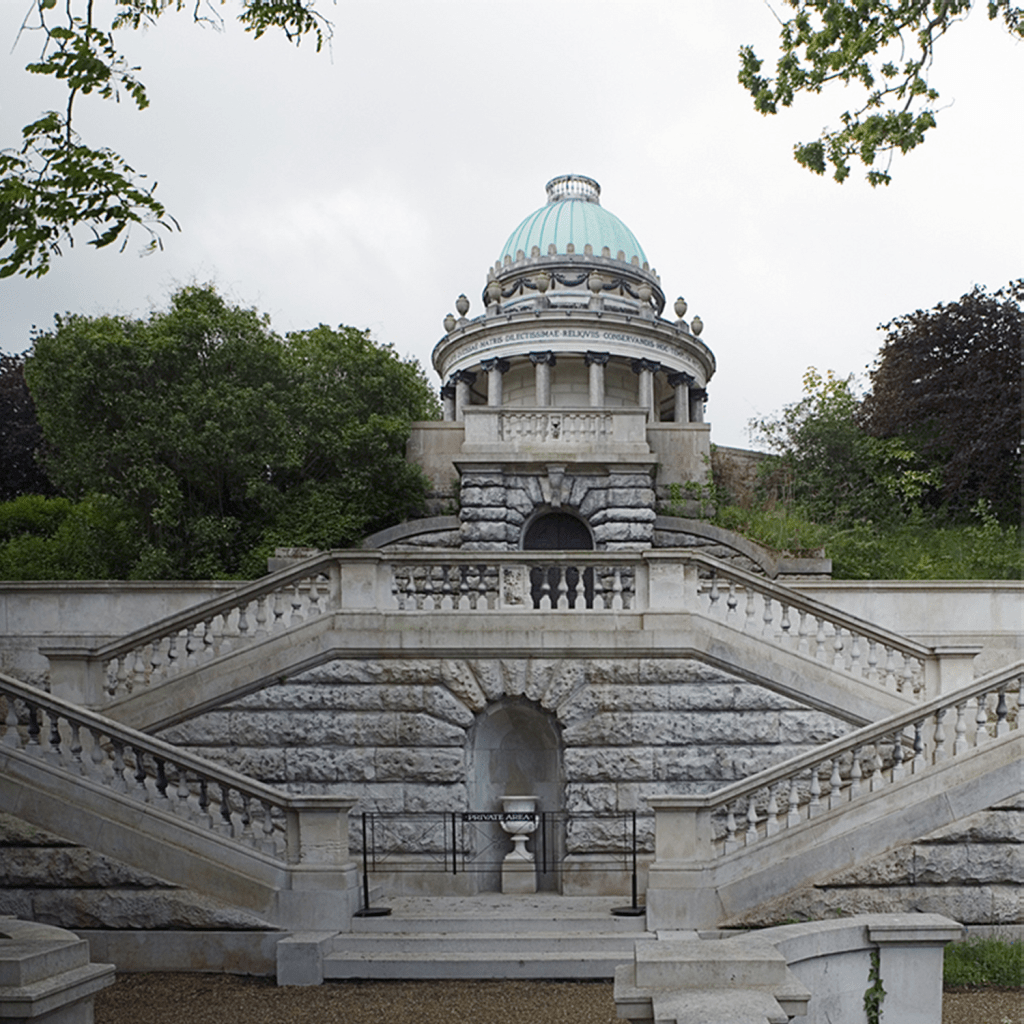
In 1861, at the age of 74, Victoria died at Frogmore House in Windsor. The Queen was at her side. Upon reading her late mother’s papers Queen Victoria learned that her mother had in fact loved her deeply. The distraught Victoria blamed Conroy and her old governesses for conspiring to sour the relationship between her and her mother. The Duchess of Kent’s Mausoleum was built at Frogmore and it is here that she is interred.
And now to the letter. Written in Victoria’s native German, it is unfortunately undated and undesignated. She signs her name as a simple V rather than Victoria, suggesting the recipient must have been well-known to her, although note the use of formal Sie instead of the familiar du. The paper is incredibly delicate and it is a wonder that it has survived. The perforated border is a nice touch.
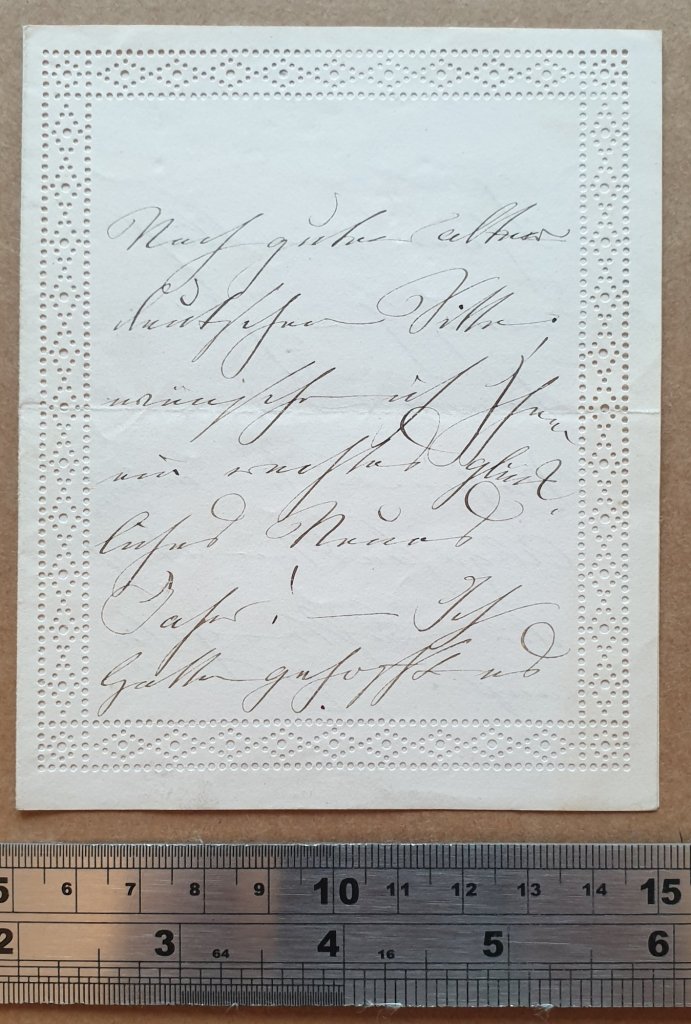
Nach guter alter
deutsche Sitte
wünsche ich Ihnen
ein rechtes glück
liches Neues
Jahr! - Ich
hatte gehofft es
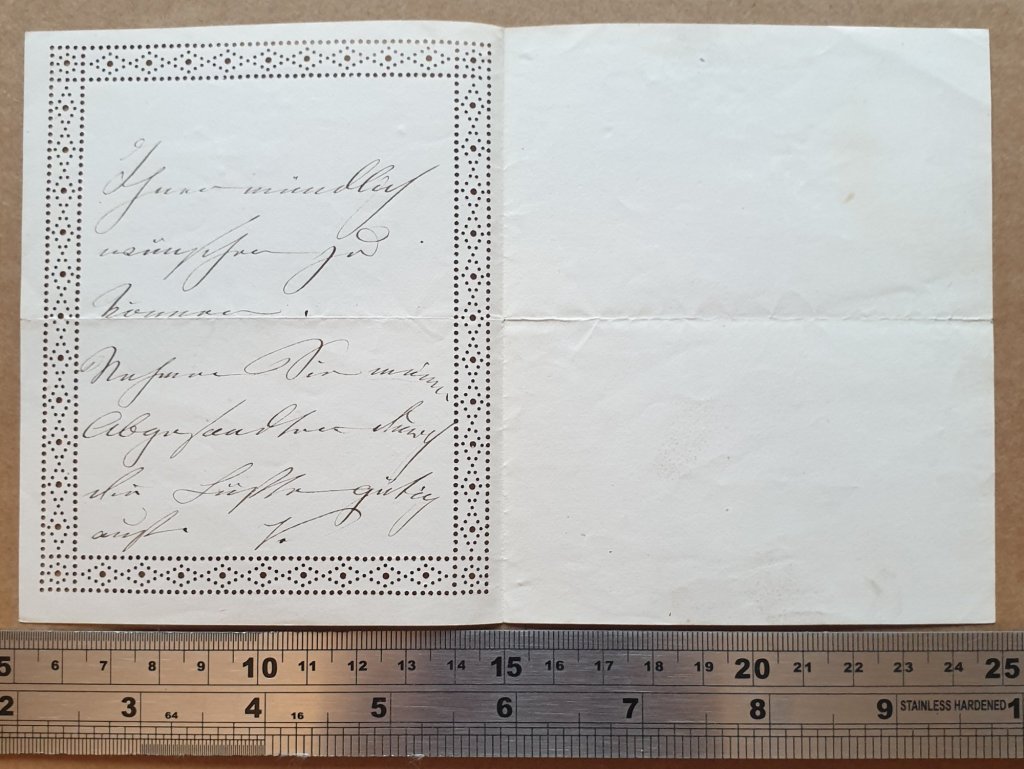
Ihnen mündlich
wünschen zu
können.
Nehmen Sie meinen
abgesandten durch
die Lüfte gütig
auf.   V.

In good old
German custom
I wish you
a very happy
new year! - I
had hoped
to be able
to wish it to
you verbally.
Please receive my
envoy kindly
through the air.
V.
9th December 2025
 Brad's Letters
Leave a comment