15th July 1846 – 18th December 1897
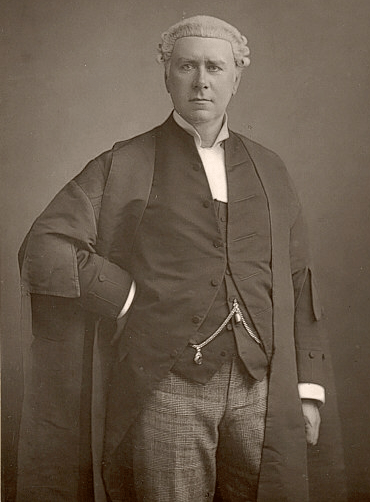
Sir Frank Lockwood was a successful lawyer and politician. Born in Doncaster, Sir Frank attended Manchester Grammar School before heading to Caius College, Cambridge. In 1872, aged 26, he was called to the bar at Lincoln’s Inn. He enjoyed a good level of success in the profession, earning 120 guineas in his first year and 265 guineas in the second.
In 1874 Sir Frank married Julia Rosetta Schwabe at Llandegfan on Angelsey. They had two daughters, Lucy and Katherine.
In 1879 Sir Frank had his first high-profile case as the defence for the murderer Charles Peace.
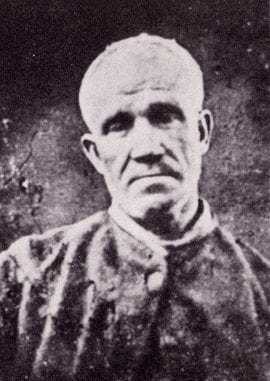
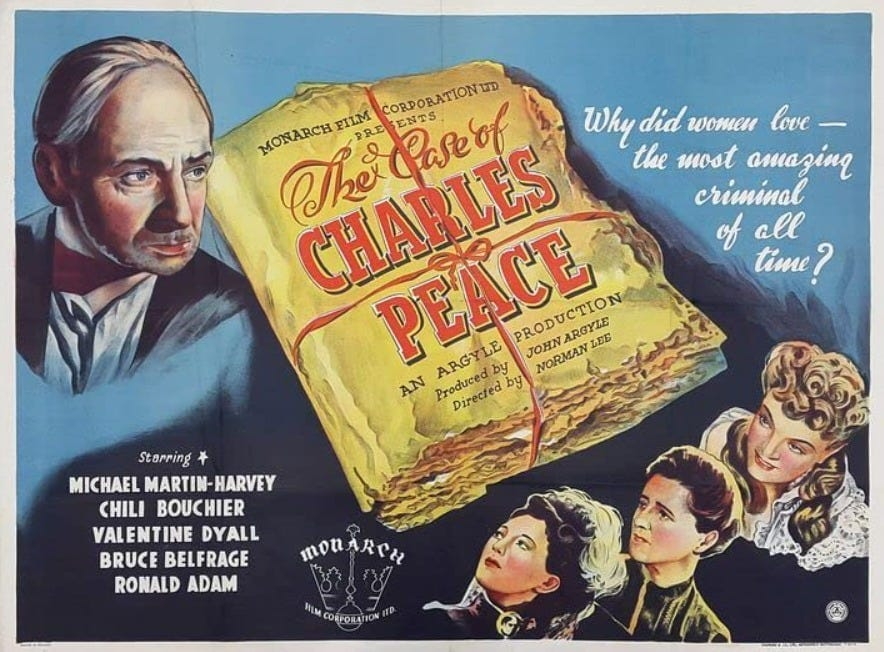
Peace had killed a policeman in Manchester before heading to Sheffield. There, he developed an infatuation with his neighbour and killed her husband. Fleeing to London, Peace carried out multiple burglaries before being caught. Linked to the Sheffield murder, he was unsuccessfully defended by Sir Frank and subsequently hanged at Armley Gaol in Leeds. Various plays, films, and works of literature were made about Charles Peace in the early 20th century and his waxwork is in Madam Tussaud’s.
Sir Frank was a member of a Royal Commission inquiry into corrupt practices at Chester in 1880. Two years later he was appointed a Queen’s Counsel and then in 1884 Sir Frank was made recorder of Sheffield.
Sir Frank first attempted to enter the political arena in the 1880 General Election when he contested the seat at King’s Lynn. He was unsuccessful, and missed out again on a place in Parliament in the 1883 York by-election. Success came two years later when Sir Frank was elected the Liberal Member of Parliament for York in the 1885 General Election. He would go on to win four more elections and held the position until his death in 1897.
In 1894 Sir Frank was appointed solicitor-general in Lord Rosebery’s short-lived government. Due to the government’s collapse in 1895 he held the post for less than a year. 1894 was also the year that Sir Frank received his knighthood.
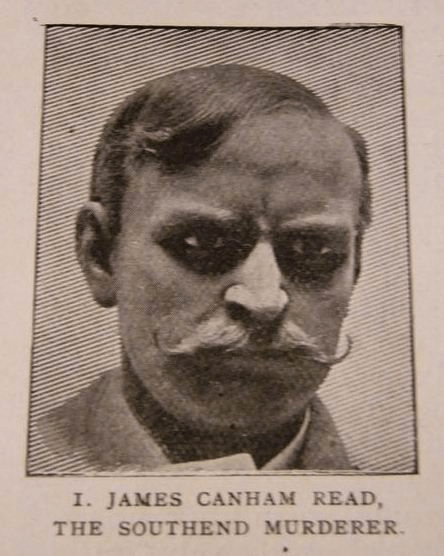
1894 brought another high-profile legal case Sir Frank’s way when he led the prosecution in the trial of James Canham Read, known as the Southend Murderer. Read was a bigamist who shot and killed his pregnant mistress. Tried at Chelmsford, he was hanged at the prison there after being found guilty in a trial that caught the attention of the media.
Sir Frank’s most notable legal case came in the late spring of 1895 with what is regarded as the world’s first celebrity trial. Permit me to digress for a few paragraphs in order to provide the background to a fascinating few months in 1895.
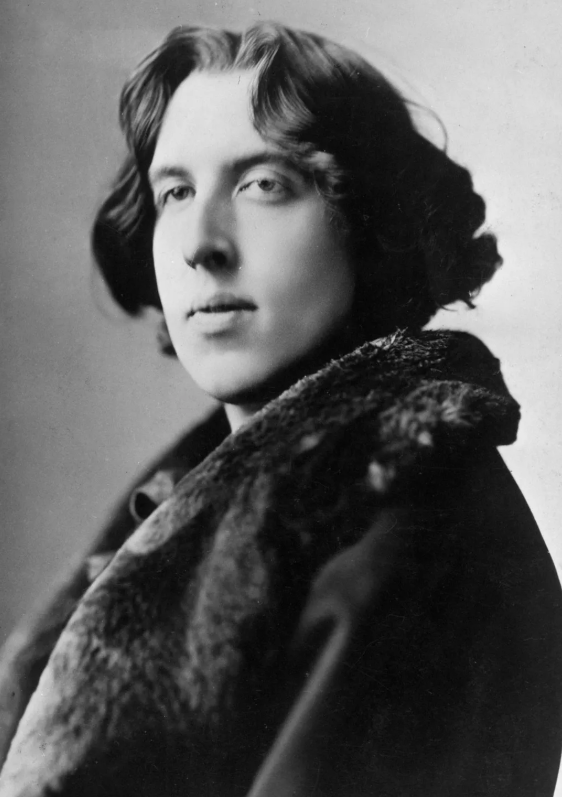
In 1891 the poet and playwright Oscar Wilde met Lord Alfred Douglas, the son of John Sholto Douglas, the Marquess of Queensberry. It became apparent that their relationship went beyond that of platonic pals and Queensberry was steadfast in his disapproval. Demands that his son walk away from Wilde fell on deaf ears. Events came to a head on the 18th February 1895 when Queensberry left his calling card for Wilde at the Albemarle Club in London. On it he had written For Oscar Wilde posing somdomite (sic). Furious, Oscar Wilde went to his solicitor. A warrant was served against Queensberry, who was arrested and charged with libel.
Edward Clarke, who had been solicitor-general in the Conservative government of 1886-92, was asked to prosecute the case. In a meeting with Oscar Wilde, Clarke said he could only take the case if Wilde assured him that Queensberry’s claims were indeed false. Wilde confirmed the mendacity of the allegations before immediately heading off for a holiday to the South of France with Douglas. Returning to London a week before the libel trial commenced, Wilde’s friends, who were no doubt in a position to know the truth, urged him to drop the case. Wilde refused and so the trial began on the 3rd of April.
The First Trial
The trial started well for the prosecution and Wilde. Edward Clarke gave an outstanding opening statement that even impressed Queensberry’s defence barrister, Edward Carson. Wilde himself took the stand and began by lying about his age, claiming to be 39 instead of 41. During Carson’s cross-examination Wilde sought to be the flamboyant entertainer, making jokes, giving flippant answers, and producing witty ripostes which, on occasion, contradicted previous answers. Carson shocked the court by producing expensive gifts which Wilde admitted to having given to young males. Carson pointed out that the recipients of Wilde’s largesse were not his social equals but those from the lower working class: newspaper sellers, valets, the unemployed, many of whom, in contrast to Wilde the celebrated poet and playwright, were barely literate. They were also young. When asked if he had kissed a 16-year-old Walter Grainger, No, he’s a peculiarly plain boy. was Wilde’s response. Why mention his appearance? asked Carson. Wilde could provide no answer.
The prosecution closed their case and Queensberry’s defence began. Carson announced his intention to call to the witness box numerous young males who’d had sexual relations with Oscar Wilde. Realising the tables had turned, Edward Clarke advised Wilde that the libel prosecution should be dropped. Wilde agreed, and the next day Clarke made the announcement in court.
With enough evidence to now charge Oscar Wilde with gross indecency, Queensberry’s solicitor passed witness statements to the Director of Public Prosecutions. A warrant for Wilde’s arrest went to magistrate John Bridge at 1530. Bridge asked a clerk for the time of the last train to Dover. In an apparent attempt to give Wilde a chance to escape to Dover and so then to the Continent, Bridge delayed signing the arrest warrant until 1700, fifteen minutes after the last train departed. Meanwhile, at the Cadogan Hotel, Wilde was torn between staying and fleeing. He kept changing his mind until he noticed that he’d missed the last train. He was arrested later that evening and charged with twenty-five counts of gross indecency and conspiracy to commit gross indecency.
The Second Trial
The second trial began on the 26th of April with Wilde this time in the dock. The prosecution produced several young males to testify against Wilde. On the fourth day Wilde took to the stand. The arrogance and hubris of before was gone and he answered the questions quietly. Once again he denied all the accusations. Despite the prosecution’s strong case the jury were undecided. A hung jury was the result, a retrial would be required, and Oscar Wilde was released on bail.
It is now that our man, Sir Frank Lockwood, takes to the stage. Upon the news of a retrial, Queensberry’s attorney from the libel case, Edward Carson, asked Sir Frank, who was solicitor-general in the Liberal government, Can we not let up on the fellow now? Sir Frank replied that he’d like to but the case had become too politicised to be dropped.
The Third Trial
The third trial, the second criminal trial of Oscar Wilde, began on the 25th of May. This time the prosecution barrister was Sir Frank Lockwood himself. The witnesses were produced, Sir Frank cross-examined Wilde, the evidence was compelling. Wilde is a man of culture and literary tastes, and I submit that his associates should have been his equals, said Sir Frank in his closing speech to the jury. Instead, Wilde chose to have relationships with these illiterate boys you have heard in the witness box. Oscar Wilde described Sir Frank’s closing speech as an appalling denunciation (of me), like something out of Tacitus, like a passage in Dante, like one of Savonarola’s indictments of the Popes of Rome.
The gross indecency charge, of which Oscar Wilde was convicted, had been introduced ten years earlier in 1885. Until then, an adult could take advantage of a child aged 13 or over and, as long as it did not amount to actual rape, no crime was committed. The law was applied here as many of Wilde’s acquaintances were aged around 15 and 16. If he’d maintained relationships with men of his own age and social status then it is unlikely he would have faced prosecution. It is important to note that had Oscar Wilde been alive today, he would still face prosecution. The Sexual Offences Act 2003, Section 47, makes it a criminal offence to pay under-18s for sex. The maximum sentence today is 7 years for incidents involving 16-year-old victims and 14 years for 15-year-old victims, which is considerably more than the then-maximum of 2 years which Wilde received. There was a separate crime on the statute book of sodomy. Wilde, however, was never charged with this offence; evidence produced in court suggests that such a charge could also have returned a guilty verdict.
The Wilde Trials did much to change public perception of homosexuality. Criminal convictions for such activity were rare and gay men were generally viewed more with pity than disgust. The revelation that the erudite, intellectual, and middle-aged Oscar Wilde was using his fame and wealth to procure sex from illiterate teenage boys caused the public to view gay men in general as predators. Wilde’s brand of effeminate dandyism also subsequently became associated with homosexuality.
Upon Oscar Wilde’s release from prison he immediately went to Dover and then to the Continent. In 1900, in Italy, the 45-year-old Oscar Wilde formed a relationship with Giuseppe Loverde, a 15-year-old Italian boy.
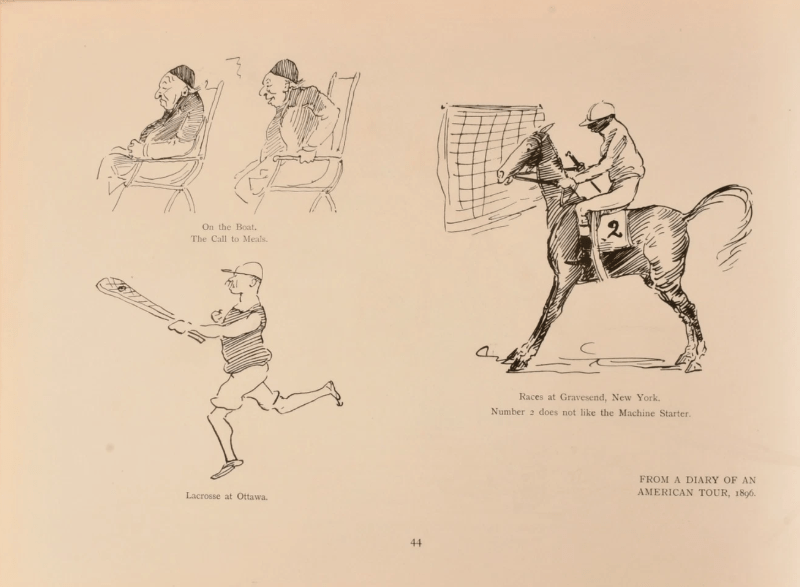
In 1896 Sir Frank embarked on a trip to the United States along with Lord Chief Justice Russell and the wonderfully-named barrister Montague Hughes Crackanthorpe. The trio were invitees to the nineteenth meeting of the American Bar Association and they helped to sustain the friendship between the American and English bench and bar. Sir Frank had a reputation as an entertaining after-dinner speaker and he proved to be equally successful in this capacity in the United States.
Sir Frank was a talented caricaturist and would often produce sketches for the amusement of his friends. In March 1889 his work was exhibited in London and he also made artistic contributions to Punch magazine from 1893 to 1897.
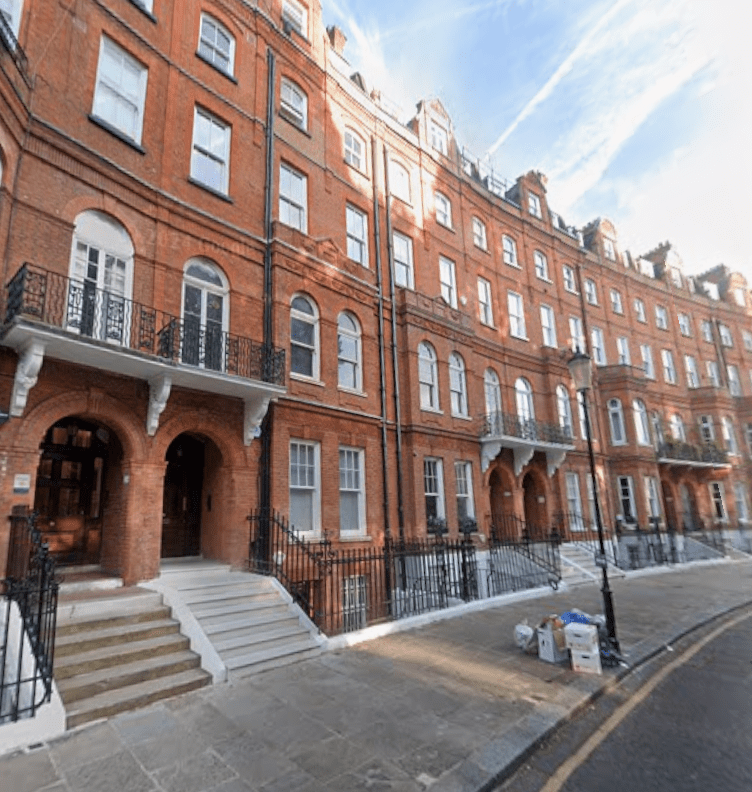
In the winter of 1897 Sir Frank suffered for several weeks with what was described as an internal disorder. This was quickly followed by a bout of influenza. At the age of 51, Sir Frank died at his London home of 26 Lennox Gardens, the same address at which our letter was written.
Here is our letter. It is written on mourning paper, as evidenced by the black border. It’s most likely his wife who had died, although a cursory search of the records has not turned up anything to confirm this.
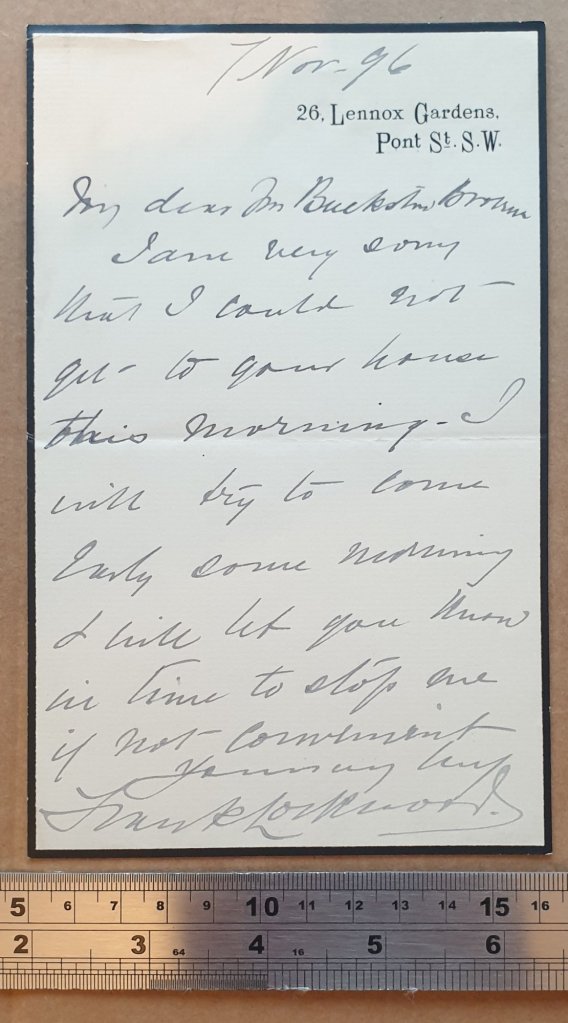
              7 Nov. 96
My dear Mr Buckshaw Brown (?)
   I am very sorry
that I could not
get to your house
this morning - I
will try to come
early some morning
& will let you know
in time to stop me
if not convenient.
   Yours very truly
Frank Lockwood.
The letter is legible except for the recipient’s name. It could be Buckshaw, or possibly Buckland. A simple note from a man with a fascinating life.
3rd February 2026
 Brad's Letters
Leave a comment